
Gum grafts
 +41 22 547 44 44
 Make an appointment
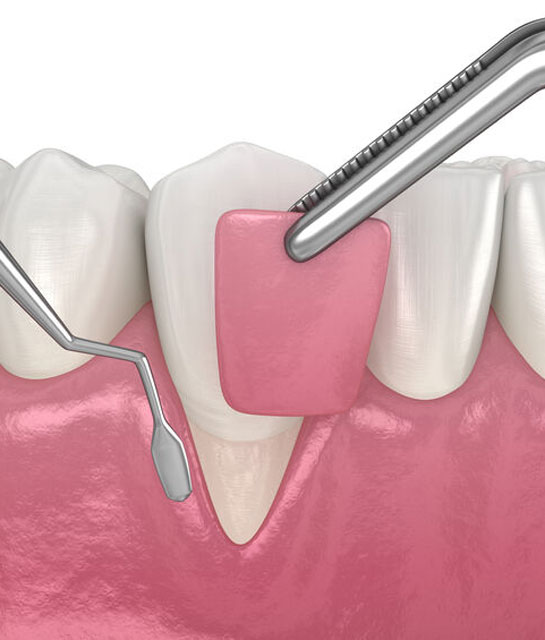
Gum grafts
The purpose of a gum graft is to correct and improve the appearance of receded gums.
Several factors can predispose you to receding gums, such as:
- Thin gums
- Excessively vigorous brushing
- Broken tissue
- An ineffective filling, making it difficult to keep plaque under control and resulting in inflamed and receded gums.
- Dental malposition
- Bruxism
Receding gums can affect your mouth in several ways:
- Cosmetic concerns because the teeth appear too long
- Tooth sensitivity and increased risk of cavities because the roots are exposed
- In severe cases: the underlying bone becomes weaker due to the lack of gum protection in the spaces between the teeth
Gum grafts are used to treat receding gums.
Three-step process:
- Prepare the site: The area to be treated is decontaminated to enable proper coaptation of the graft. The dentist then cleans and planes the surface using curettes.
- Remove tissue from the palate: The specialist collects thicker tissue and prepares it for the graft.
- Suture the graft to the prepared gums: This adds thickness to the treated area. The specialist finishes by suturing the collected tissue in place.
Check out this video…
Do you have receding gums? Book an appointment with our specialists!
FAQ
What is a gum graft and when is it needed?
A gum graft is a periodontal surgery that repairs gum recession by rebuilding soft tissue around exposed tooth necks. Clinique Dentaire de Chantepoulet recommends it in cases of thin gum tissue, aggressive brushing, lip piercings, poorly placed fillings, tooth misalignment, or bruxism-induced recession. Left untreated, recession exposes roots and weakens the entire tooth-supporting structure.
What happens if gum recession is left untreated?
The clinic identifies three main consequences: a growing aesthetic impact (teeth appear longer), heightened sensitivity to hot and cold with an increased risk of root cavities, and, in severe cases, weakening of the underlying alveolar bone. A graft performed before these stages restores gum height and protects the root.
How does a gum graft work at Clinique Dentaire de Chantepoulet?
The protocol runs in three steps: preparation of the recipient site to ensure proper graft adaptation, harvesting of the connective graft from the palate (a thicker, collagen-rich tissue), and suturing of the graft to the prepared gum area. The procedure is performed under local anaesthetic in the clinic.
What is recovery like after a gum graft?
Typical recovery includes moderate discomfort for a few days at both the recipient site and the palatal donor area, managed with standard painkillers. Soft, lukewarm food is advised during the first week, along with gentle brushing of the operated area with a surgical toothbrush. Sutures are either resorbable or removed at a follow-up visit.
How can I prevent gum recession long-term?
Prevention relies on gentle brushing with a soft toothbrush, an adapted technique (such as the modified Bass method), quitting tobacco, treating any bruxism with an occlusal splint, and regular monitoring of active periodontitis. Clinique Dentaire de Chantepoulet provides hygiene-coaching during hygienist visits and can identify at-risk areas from the first sign of recession.